The short answer
Long layers suit you if your hair is past the shoulders and is medium to thick. They add movement, remove the weight that makes long hair hang flat, and keep your length. They suit every face shape, because the layers can start wherever your face needs them.
They do not suit very fine hair, unless the layers are kept few and long. Layers take hair out of the ends, and fine hair has none to spare.
What long layers actually are
Long layers are a graduated cut where the shortest layer is still long, usually at the collarbone or below. The layers blend into each other, so there is no visible step. The effect is movement and lightness rather than a new shape. From a distance the hair looks the same length. Up close it has body and swing.
This is the cut stylists give when someone says “just a trim, but make it look better”. It is also the cut most often done badly, because “long layers” means something different to every stylist. The fix is to say where the shortest layer should start.
Face shapes and where the layers start
- Round face. Layers starting below the chin. They pull the eye downward and slim the face. Layers at the cheekbone add width.
- Square face. Layers starting at the jaw, cut soft. Movement around the jaw softens the angles.
- Heart face. Layers starting at the jaw. They add fullness where a heart face is narrowest.
- Long face. Layers starting at the cheekbone, with some volume at the sides. Width balances the length.
- Oval face. Anywhere.
- Diamond face. Layers starting at the jaw, to add width below the cheekbones.
Hair types
| Hair | Verdict |
|---|---|
| Thick and straight | The best match. Layers remove weight and give the hair swing. |
| Wavy | Works well. Layers let the wave show instead of dragging it straight. |
| Curly | Works, cut dry. Layers stop the triangle shape. |
| Fine | Careful. Few layers, all starting below the collarbone, blunt ends. |
What to ask for at the salon
Say “long layers” and then say exactly two things:
- Where the shortest layer should start. Point to it on your own hair.
- Whether the bottom line should stay blunt or go soft. Blunt keeps the hair looking thick. Soft looks more natural and takes more out.
If you have any wave, ask for the layers to be cut dry. Do not say “not too short”. It means nothing. A length you can point to means something.
The regret test
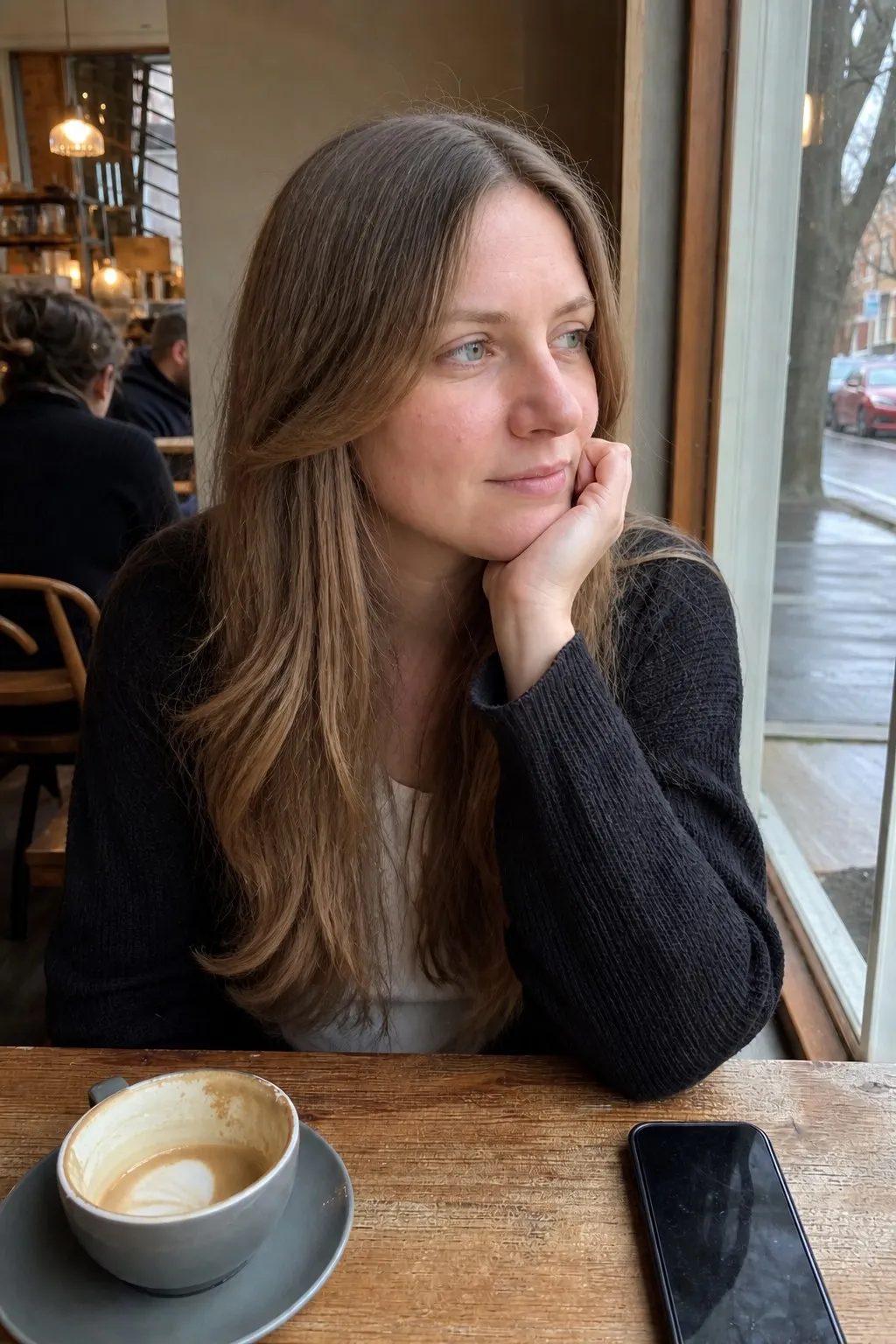
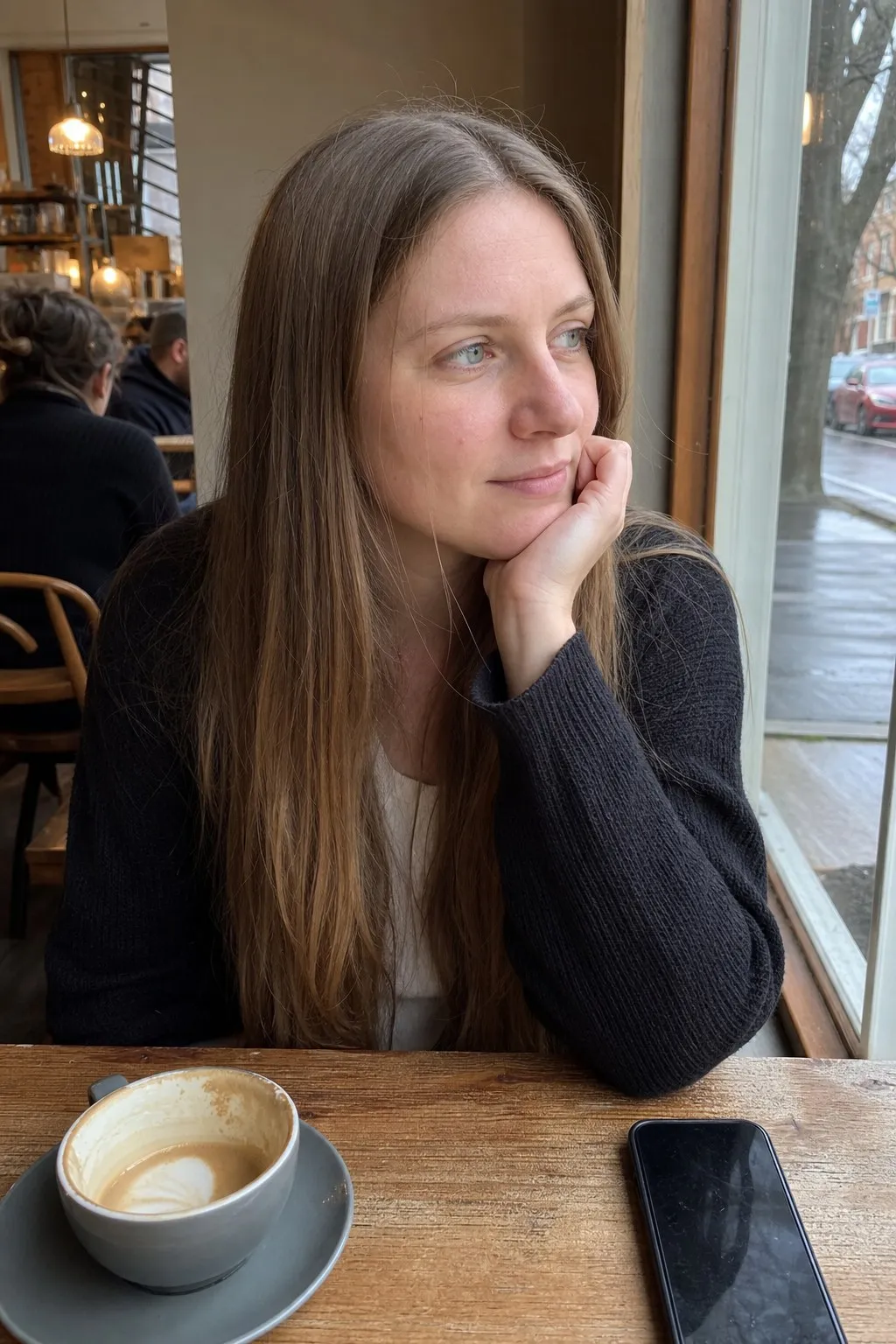
The slider at the top of this page shows one woman, one cafe window, one overcast day. Only the hair changes. The before is limp one-length hair with grown-out roots. The after is long layers with soft curtain bangs, same colour, same roots. The hair has body and the face has a frame, and she has lost no length.
The HaircutAI app shows you long layers on your own selfie, next to your hair now. Your face, one change. That is the comparison every salon photo fails to give you.