The short answer
A wolf cut suits you if your hair has at least a little natural wave or thickness, and if you like hair that looks a bit undone. It gives volume at the crown, movement around the face and keeps your length at the back.
It does not suit you if your hair is very fine and straight, or if you want a polished, smooth finish every day. The cut is built from layers, and layers on fine hair show every gap.
What a wolf cut actually is
A wolf cut is a shag on top and long hair underneath. The stylist cuts heavy, short layers through the crown, choppy pieces around the face and usually a set of wispy curtain bangs. The back stays long. The result has a lot of volume at the top of the head and a lighter, longer tail.
It grew out of two older cuts: the 70s shag and the mullet. It keeps the shag’s texture and the mullet’s short-on-top, long-at-the-back outline, without the hard line of a real mullet.
Face shapes it flatters
- Round faces. The height at the crown and the face-framing pieces add length and break up the width at the cheeks. This is one of the best textured cuts for a round face.
- Square faces. The soft, choppy layers around the jaw take the edge off a strong jawline.
- Heart faces. Curtain bangs cover part of a wider forehead, and the layers add fullness lower down where a heart face is narrow.
- Oval faces. Everything works. Pick the layer length that matches your hair texture.
Long and narrow faces need care. Volume at the crown adds height, which an oblong face already has. If your face is long, ask for the shortest layers to start at the temple rather than the top of the head, and skip the height.
Hair types
| Hair | Verdict |
|---|---|
| Wavy, medium density | The ideal match. Air-dry and go. |
| Curly | Works well. The layers open the curls up and stop the triangle shape. Ask for a dry cut. |
| Thick and straight | Works, and the layers remove weight. Needs a texture spray. |
| Fine and straight | Risky. Layers show gaps. Keep the layers longer and fewer. |
What to ask for at the salon
Say “wolf cut” and then say three more things:
- How long you want the back to stay. Point to your collarbone, shoulder blade or wherever.
- Whether you want bangs. Curtain bangs are the default. You can skip them.
- How much volume on top. Show a photo, and say if the photo has more height than you want.
Ask the stylist to cut the layers dry, or at least to check them dry. Wet hair hides how the layers will sit once it dries.
The regret test
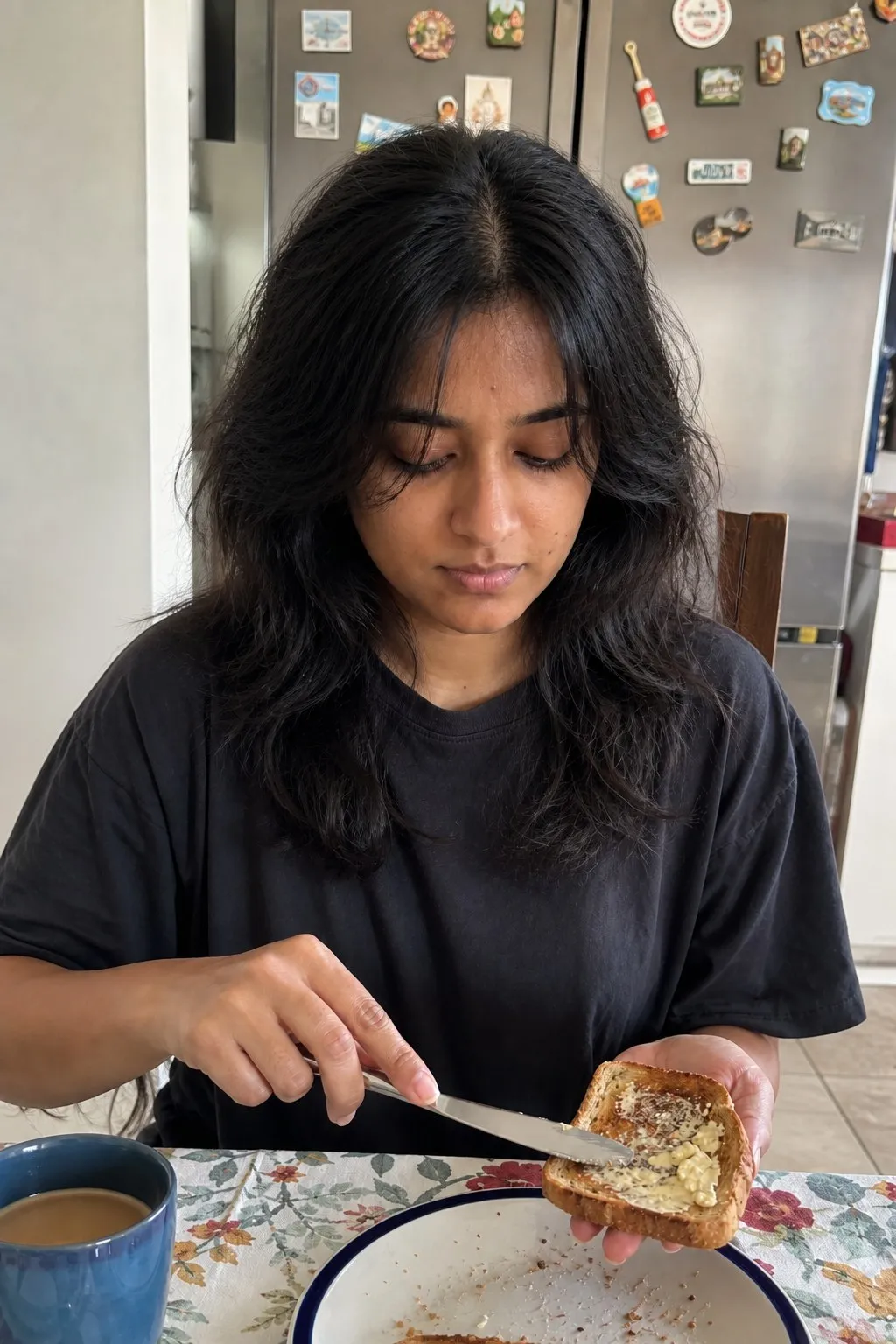
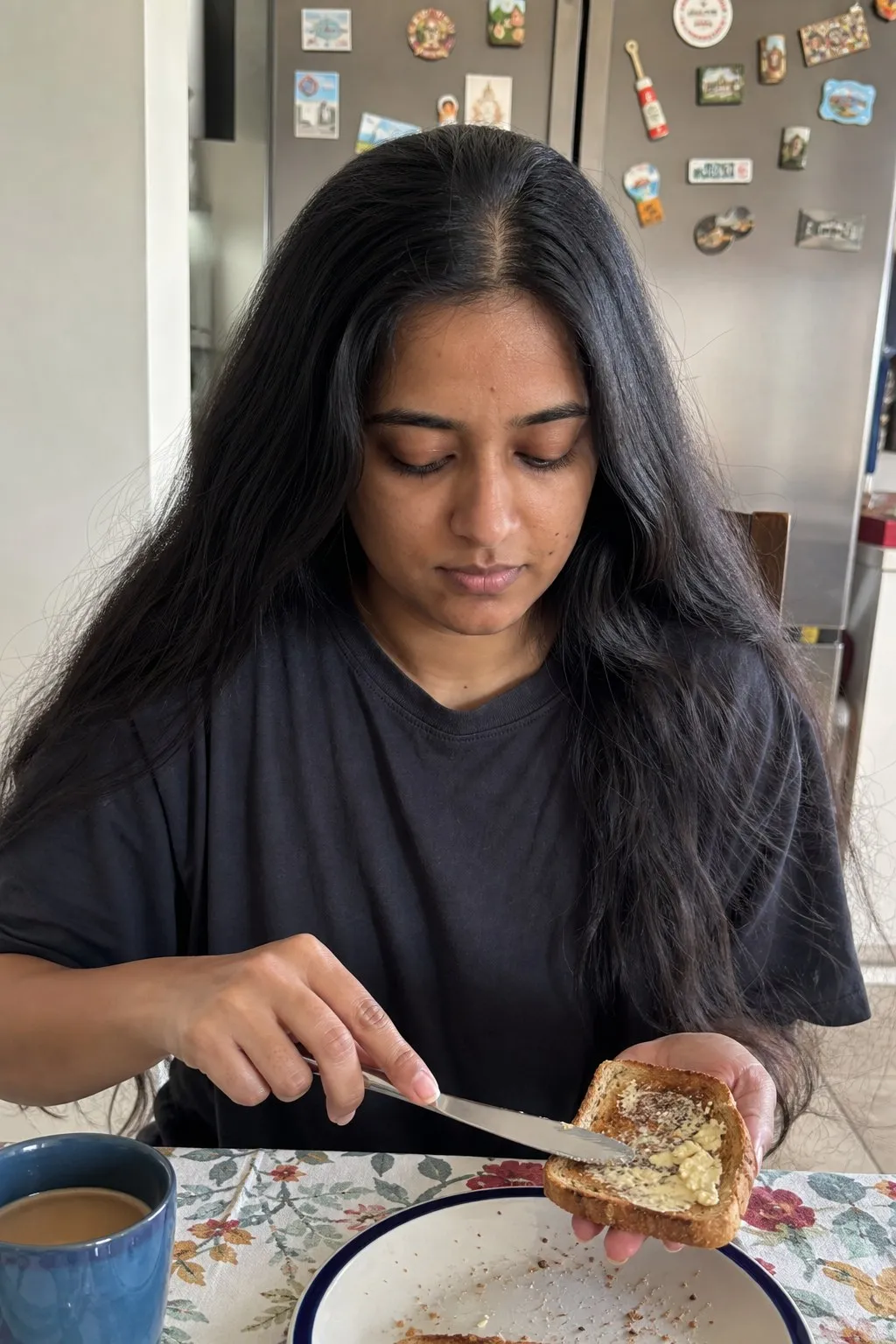
Before you cut anything, look at the slider at the top of this page. The woman’s face, the kitchen and the light are identical in both photos. The only change is the hair. That is the comparison that matters: your face, one variable.
The HaircutAI app does the same thing with your own photo. It reads your face shape from a selfie, then shows you a wolf cut on your own head, next to the hair you have now. If the after looks wrong on you, you have lost nothing. If it looks right, you walk into the salon knowing.